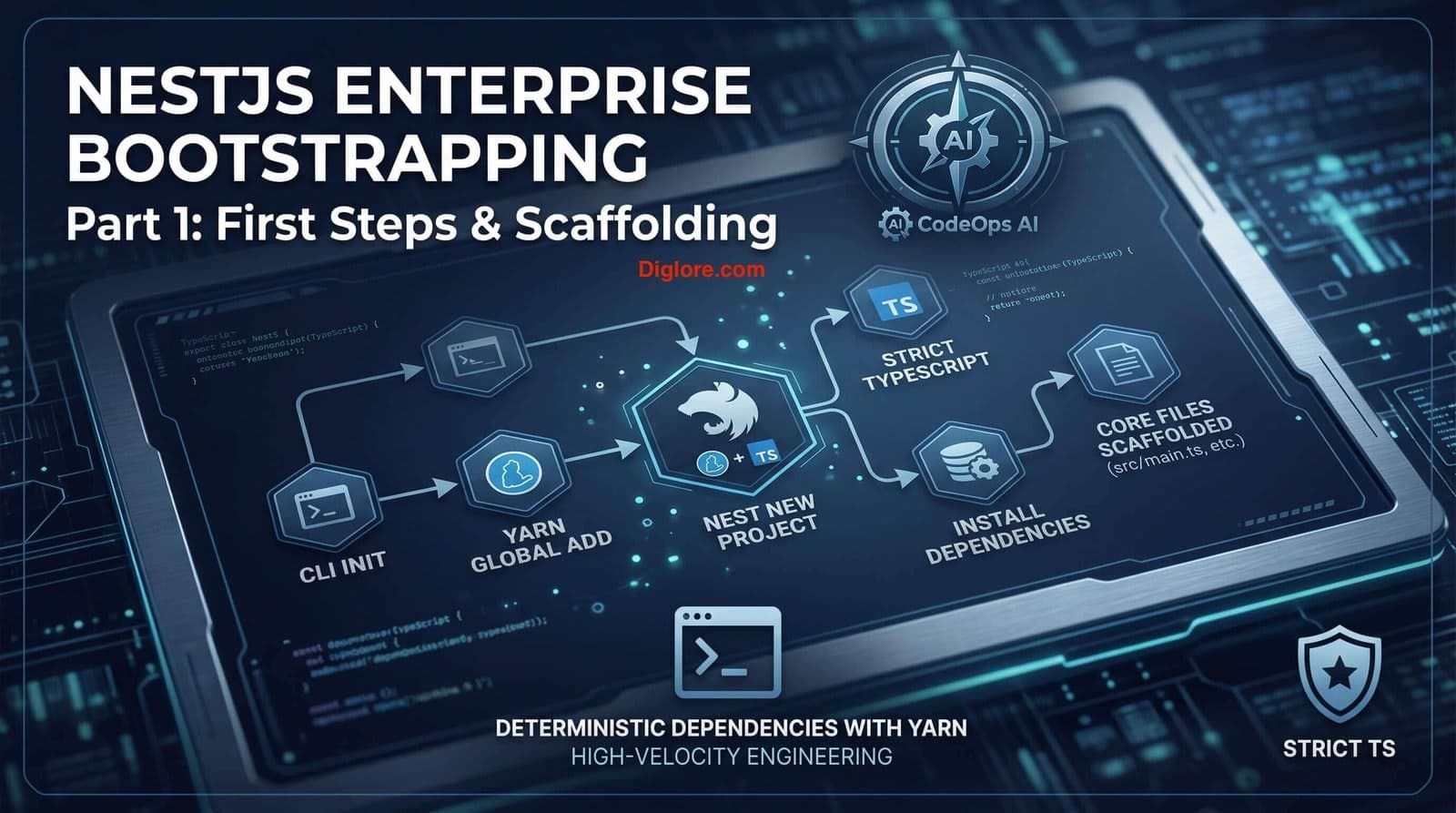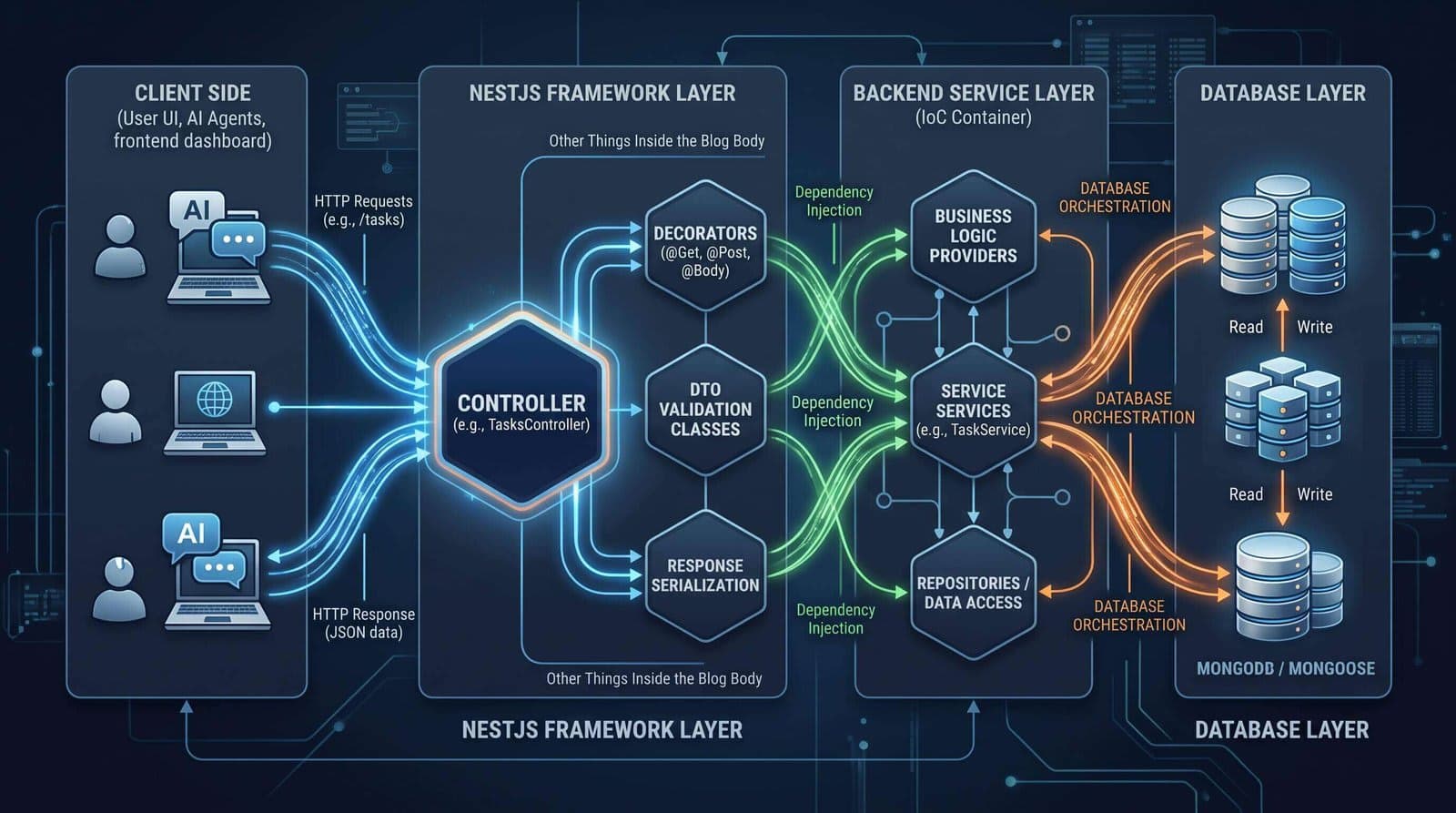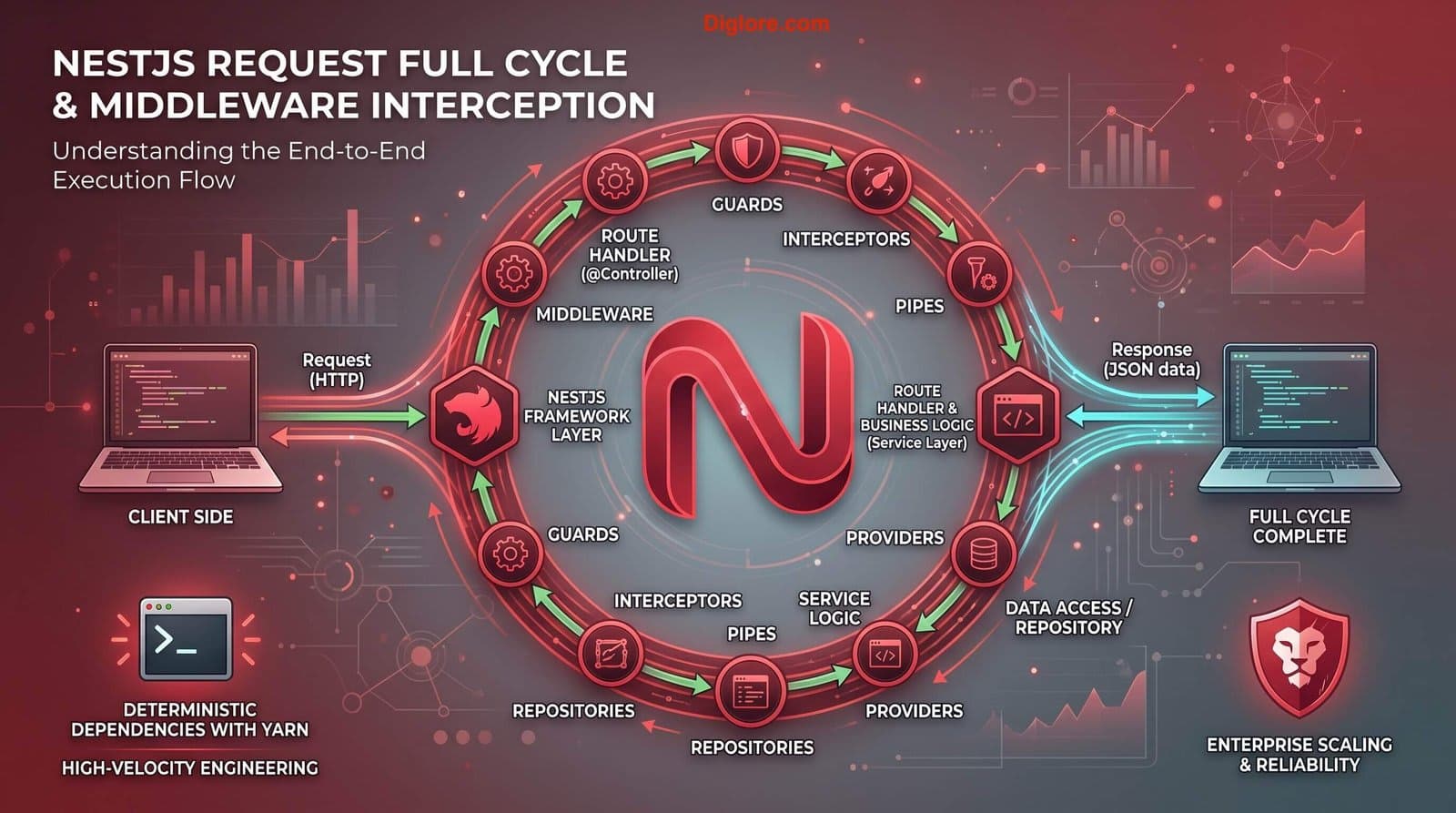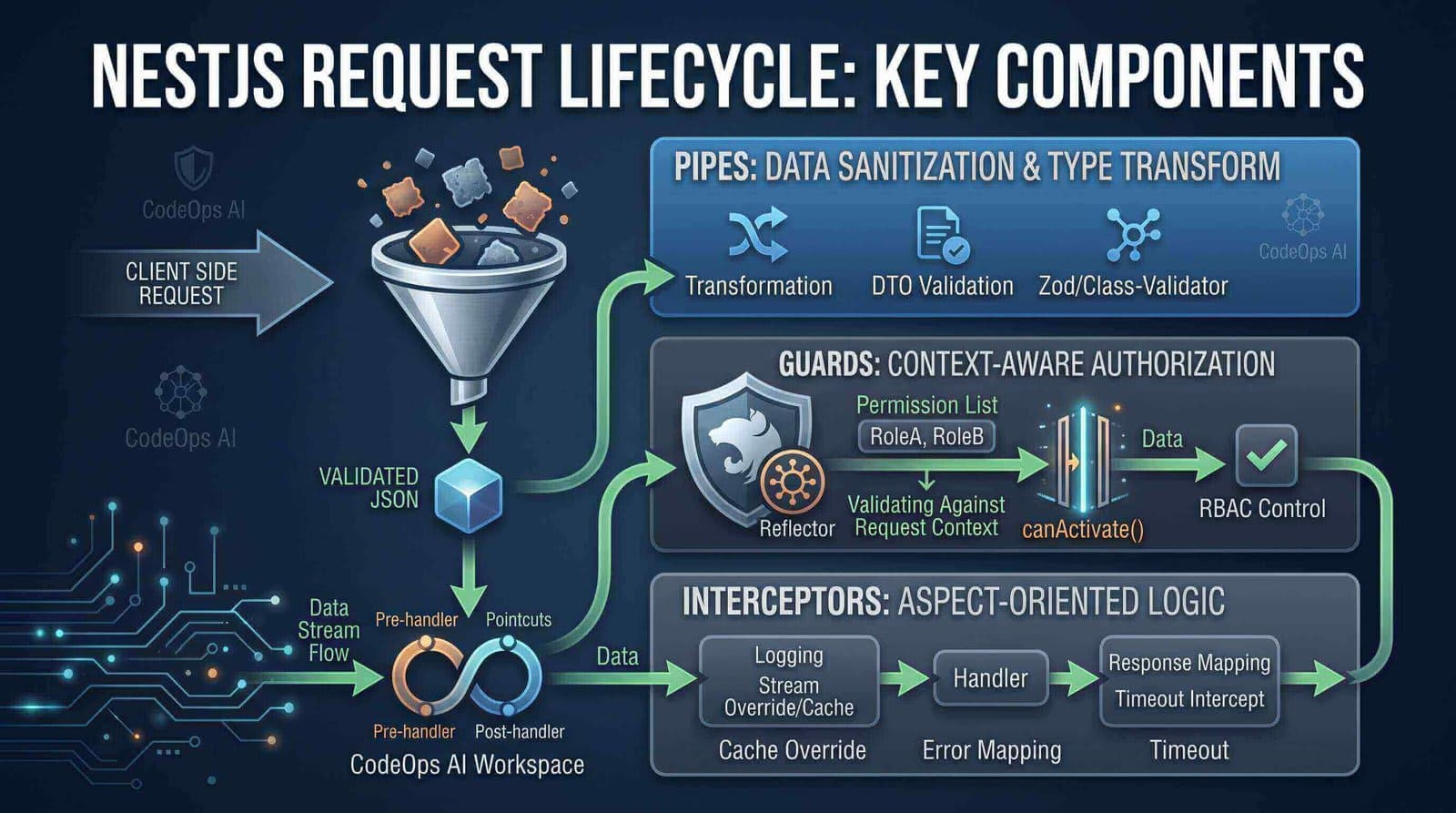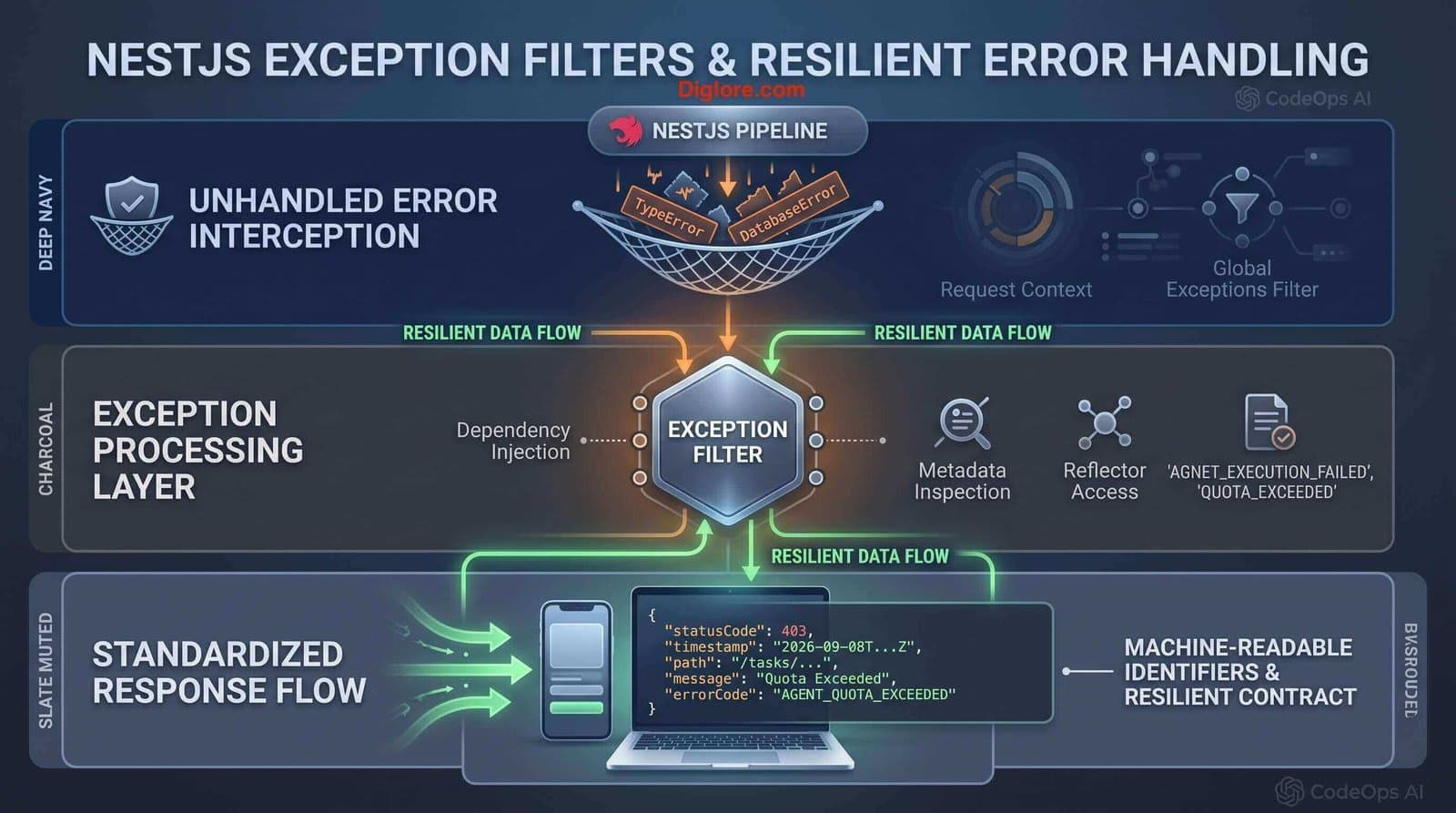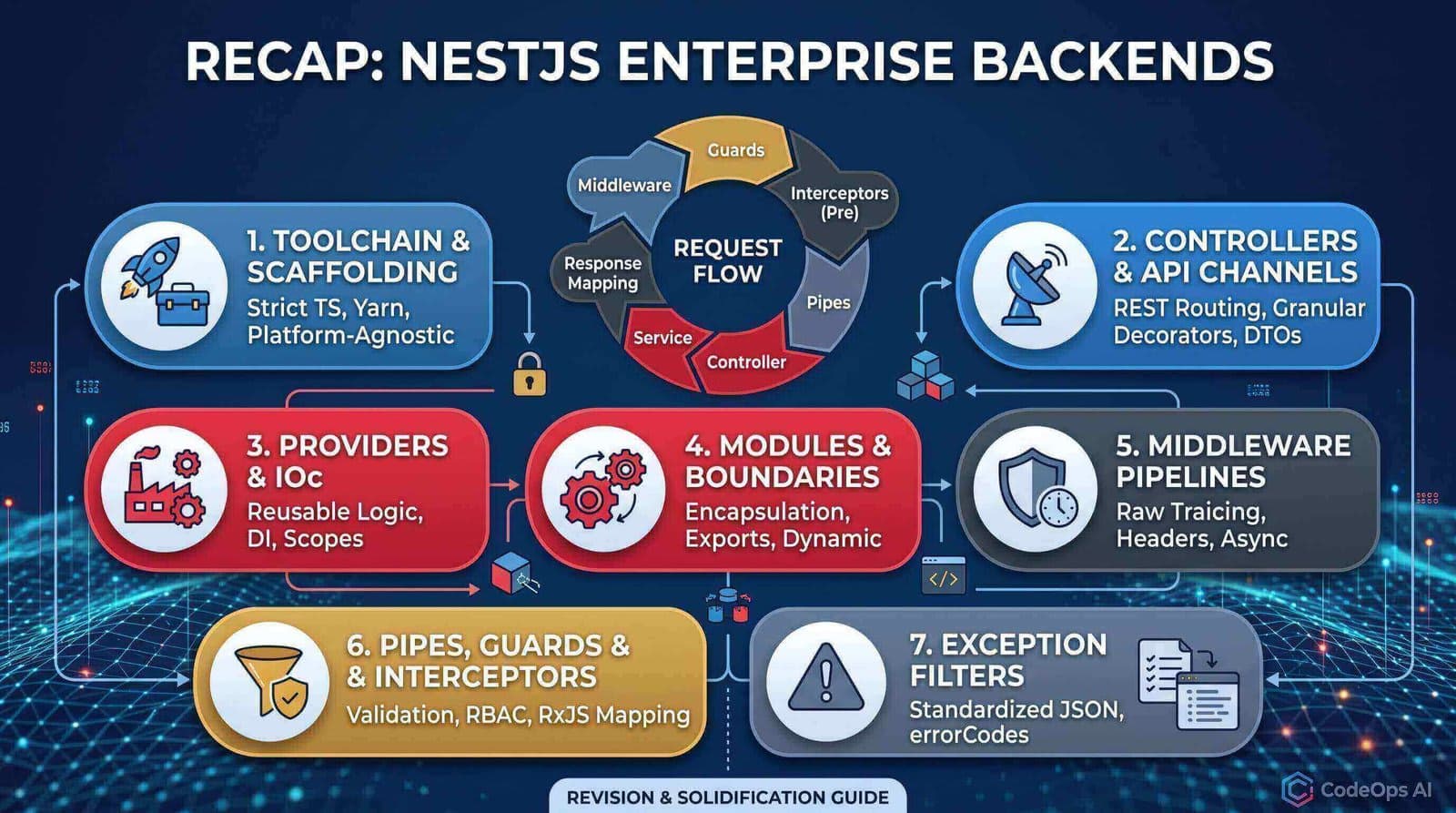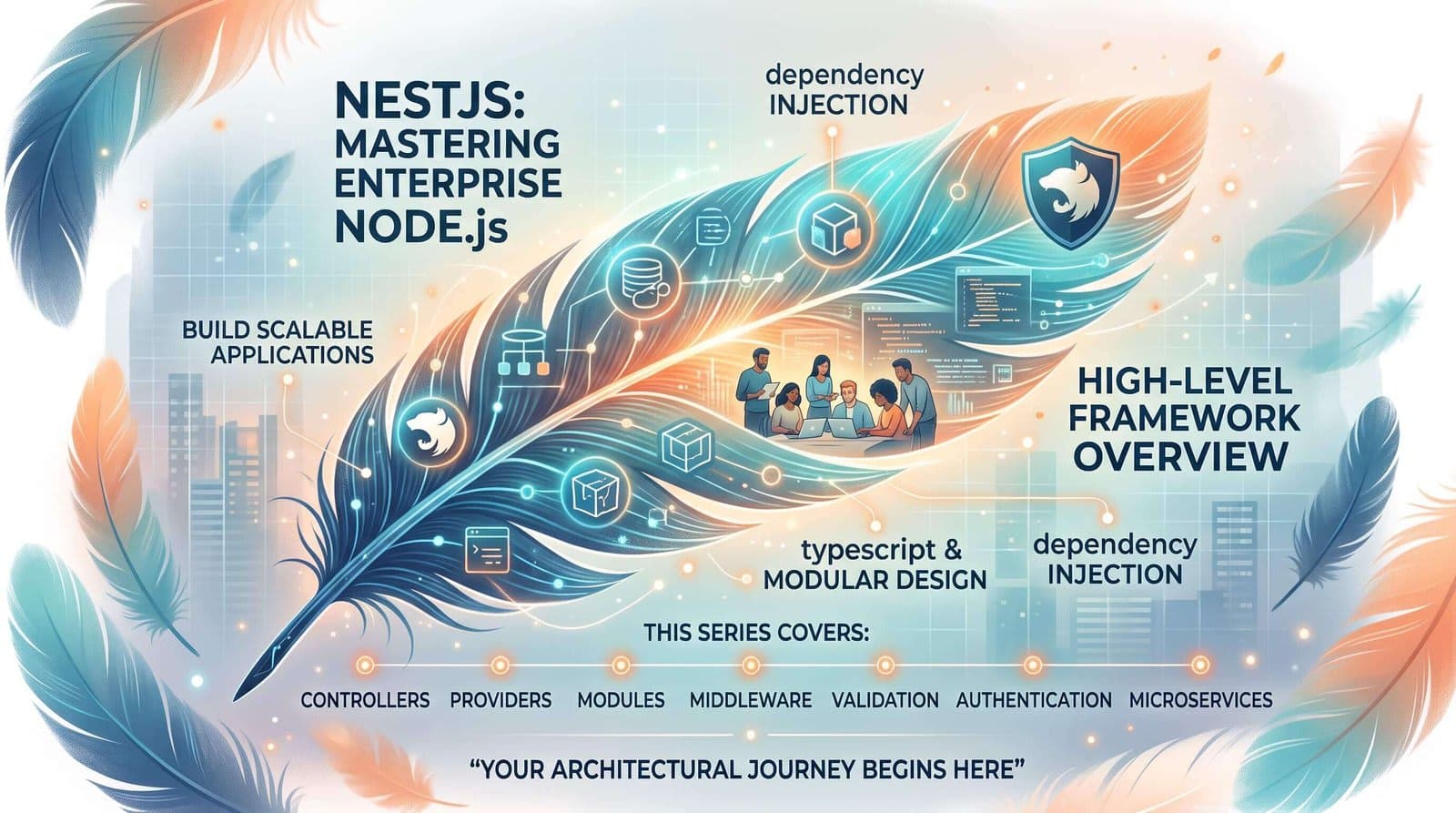
Node.js revolutionized web platforms, but rapid execution without enforced structure leads directly to architectural debt. NestJS solves this crisis by delivering a robust, Angular-inspired framework that combines Object-Oriented Programming (OOP), Functional Programming (FP), and Functional Reactive Programming (FRP). Built with strict TypeScript support, NestJS provides an out-of-the-box architecture that makes backend codebases highly testable, scalable, and maintainable.
In our enterprise AI engineering workspace project, CodeOps AI, NestJS serves as the foundational core—ensuring multi-agent workflows remain strictly decoupled and fault-tolerant.
After reading this series, you will be able to:
Master NestJS Architecture: Leverage NestJS modularity, Dependency Injection, and TypeScript to
build enterprise backends.
Eliminate Technical Debt: Replace chaotic Node setups with structured controller, provider, and module pipelines.
Implement Production Security & Quality: Apply NestJS Guards, Pipes, Interceptors, and Exception Filters for enterprise-grade execution.
Scale Workspaces with Confidence: Align framework primitives directly with complex platforms like CodeOps AI.
Why NestJS is the Standard for Backend Node.js
Unlike unopinionated HTTP libraries like Express, NestJS acts as an architectural framework layer above Express or Fastify. It gives developers total structural confidence while retaining native platform capabilities.
Dimension | Raw Express.js | NestJS Framework |
Architecture | Developer-defined (Prone to spaghetti code) | Enforced Modular structure with DI |
Type Safety | Manual / Optional TypeScript setup | Native, first-class TypeScript engine |
Maintainability | Degrades as team size expands | Scales predictably across enterprise teams |
The 10 Core NestJS Pillars
This masterclass covers the key primitives required to master NestJS within CodeOps AI:
First Steps: Setting up enterprise NestJS configurations and strict TypeScript rules.
Controllers: Handling REST channels, routes, and request payload mapping.
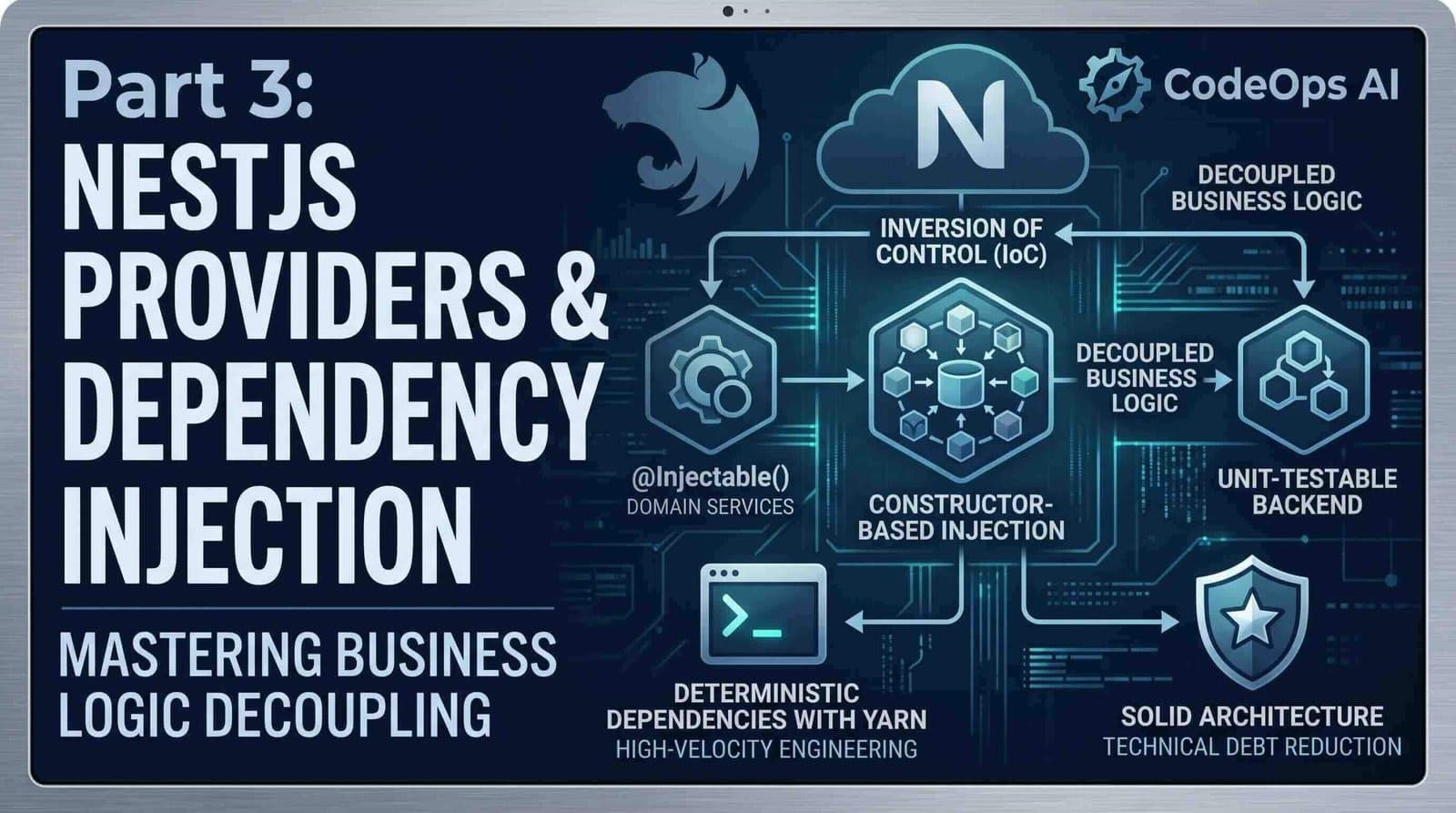
Providers: Encapsulating business logic using NestJS Dependency Injection.
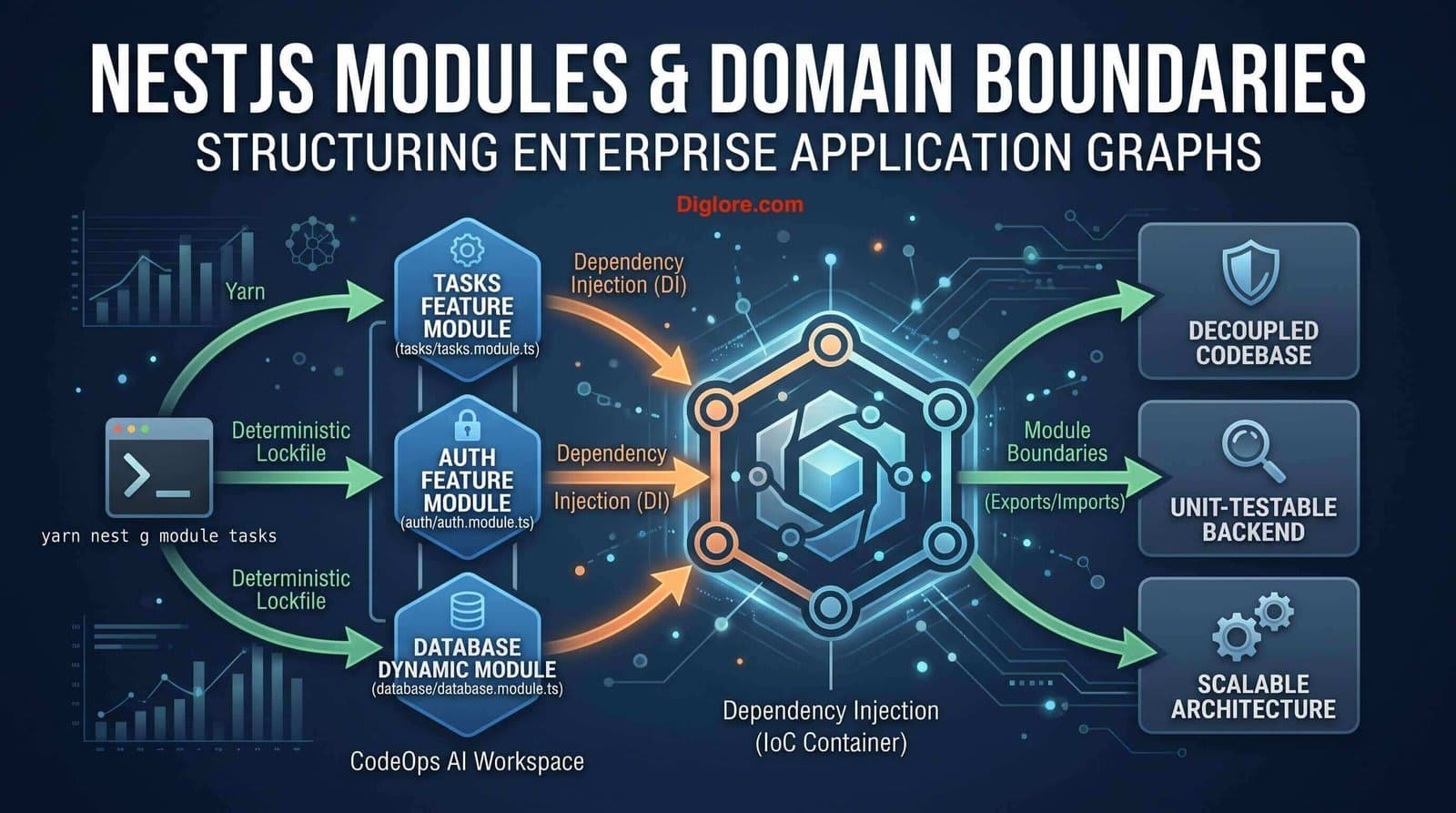
Modules: Establishing domain boundaries and organizing application contexts.
Middleware: Intercepting request streams for logging, tracing, and pre-processing.
Exception Filters: Standardizing application-wide error handling and failure reporting.
Pipes: Validating incoming payloads and transforming data types at runtime.
Guards: Enforcing authentication, RBAC, and access control models.
Interceptors: Wrapping method execution for caching, response mapping, and metrics.
Custom Decorators: Building reusable metaprogramming utilities to reduce boilerplate.
Governance & Key Pitfalls
To maximize NestJS benefits while maintaining high velocity, avoid these common implementation traps:
Over-coupling Root Modules: Isolate features into feature modules instead of putting everything in AppModules.
Bypassing Framework Layer: Avoid directly manipulating underlying Express req/res objects; use NestJS abstractions to keep code testable.
NestJS provides the precise architectural rigor enterprise Node.js applications need.